Biocatalysis Scale-Up Questions Process Chemists Ask Before Procurement
Procurement is rarely the first real decision in an API biocatalysis program. By the time a team asks for enzyme supply, the route may already have promising selectivity, a preferred solvent system, a preliminary workup, and pressure to move quickly.
That is also the point where small uncertainties become expensive.
Chiralift works as a bulk enzyme supplier for pharmaceutical biocatalysis with a focus on route fit, impurity control, documentation, and scale-up support. The questions below are designed for process chemists who need to translate a promising enzymatic step into a supply-ready manufacturing package.
1. Does the enzyme fit the intended process envelope?
A screened hit is not always a production-ready enzyme. Before procurement, confirm whether the candidate biocatalyst remains suitable under conditions that resemble the target route.
Key questions:
- Does the enzyme tolerate the substrate concentration required for the economic model?
- Is performance stable in the selected solvent or cosolvent environment?
- Does the route require pH adjustment, staged addition, or temperature control that could complicate plant execution?
- Are there known sensitivities to starting material impurities, residual metals, salts, or upstream carryover?
- Can the reaction profile support the intended batch time without forcing difficult downstream tradeoffs?
For API manufacturers, the objective is not only conversion. It is a controlled transformation that fits available equipment, campaign timing, and product quality requirements.
2. Is selectivity maintained at scale-relevant conditions?
Chiral selectivity is the primary reason many API teams select biocatalysis. However, selectivity must be evaluated against realistic process conditions, not only ideal screening environments.
Before ordering bulk enzyme, process teams should define:
- The acceptable enantiomeric profile for the intermediate or API step
- The sensitivity of selectivity to temperature, solvent ratio, and reaction endpoint
- Whether overreaction, hydrolysis, oxidation, reduction, or secondary transformations are possible
- How late-stage adjustments affect the impurity map
- Whether the enzyme lot strategy can support consistent stereochemical outcome across campaigns
A strong procurement package connects enzyme identity to process control. That gives quality, manufacturing, and sourcing teams a clearer basis for risk review.
3. What impurity risks need to be controlled before supply is locked?
An enzymatic step may simplify a route, but it still introduces impurity questions. These should be addressed before bulk procurement, especially when the step is close to the API or a registered intermediate.
Process chemists typically ask:
- Which process-related impurities may increase if the reaction is pushed harder?
- Can starting material impurities inhibit the enzyme or change selectivity?
- Are there residual protein, host-derived, or formulation-related considerations for the workup?
- Does the quench generate new related substances?
- Does the isolation step remove enzyme-derived material consistently?
The goal is not to over-document early development. The goal is to identify which risks matter before the route becomes difficult to change.
4. Is the downstream workup practical for the plant?
A biocatalytic reaction can look strong in development and still create manufacturing issues if the workup is not robust. Procurement discussions should include downstream handling, not only enzyme pricing.
Review the following:
- Filtration behavior after reaction completion
- Phase separation, emulsion risk, or solids handling constraints
- Compatibility with existing vessels, filters, centrifuges, or dryers
- Residual enzyme removal strategy
- Solvent recovery and waste stream profile
- Product stability during hold, quench, extraction, or concentration
A production enzyme should support the whole unit operation sequence. Chiralift can align enzyme selection and formulation considerations with the practical handling requirements of API manufacturing.
5. What documentation is required for internal approval?
For pharmaceutical API manufacturers, procurement decisions must be defensible. Documentation expectations may vary by development phase, route position, and customer quality system.
Before requesting supply, define the documentation set needed for review. Typical needs may include:
- Product identification and specification framework
- Batch-specific quality documentation
- Manufacturing and quality control summary information
- Material safety information
- Allergen, origin, and composition declarations where applicable
- Change notification expectations
- Storage and handling guidance
- Supply traceability information
The right documentation package reduces back-and-forth between process chemistry, quality, regulatory, and procurement teams.
6. Can supply support the intended campaign plan?
A successful demonstration run can fail commercially if enzyme supply is not aligned with the campaign schedule. Procurement planning should address both current and future demand.
Ask early:
- What quantity is required for engineering, validation-supporting, or commercial campaigns?
- Is lead time compatible with the manufacturing plan?
- Can future lots be supplied with consistent documentation expectations?
- What change control or notification process is available?
- Is there technical support for process transfer or troubleshooting?
- Are storage conditions practical for the receiving site?
Supply confidence is a process variable. It should be assessed before the route becomes dependent on a single poorly defined material source.
7. What should be included in a quote request?
A useful quote request gives the supplier enough context to evaluate enzyme fit, documentation needs, and scale-up risk without exposing unnecessary confidential detail.
For a productive review, include:
- Target transformation type and route position
- Substrate class and known sensitivities
- Desired stereochemical outcome
- Approximate development phase
- Current reaction conditions at a high level
- Expected procurement quantity or campaign range
- Required documentation and quality expectations
- Target delivery timing
- Known constraints around solvent, pH, temperature, isolation, or equipment
If confidentiality is required before technical disclosure, Chiralift can start with a structured procurement discussion and proceed under the appropriate documentation process.
Embedded explainer video
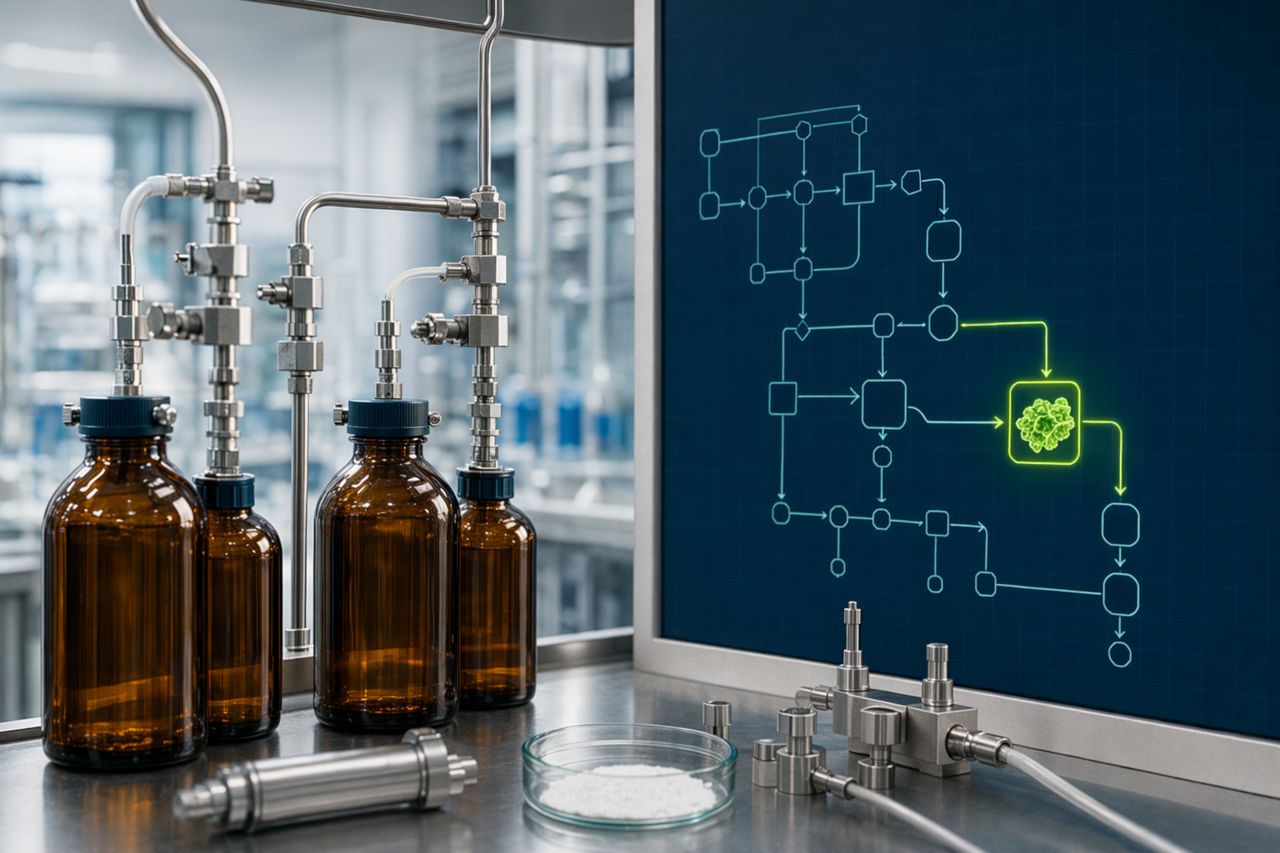
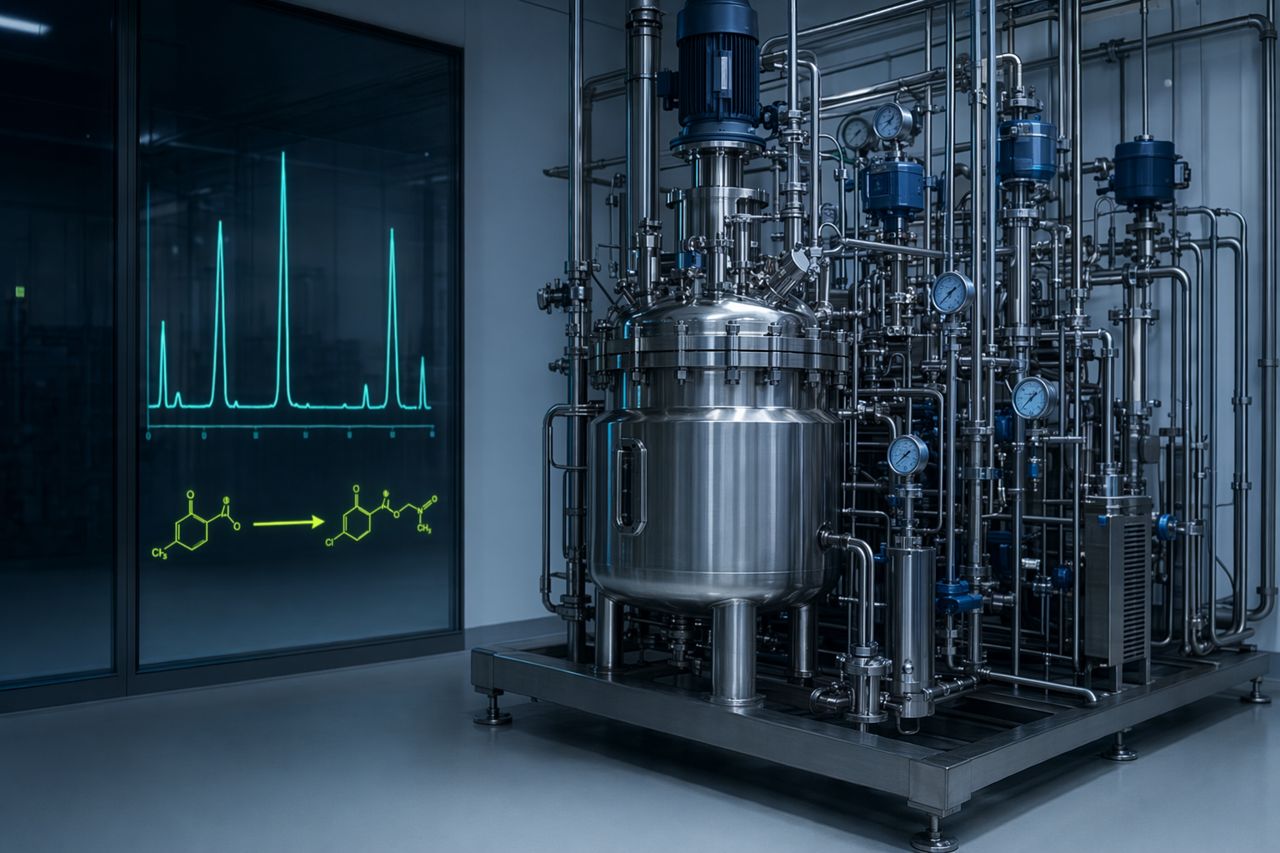
A short faceless explainer can be embedded here to summarize the procurement questions: route fit, selectivity, impurity control, downstream handling, documentation, and supply confidence.
Video format: voiceover, on-screen subtitles, and sterile industrial still frames. No avatar. No talking head.
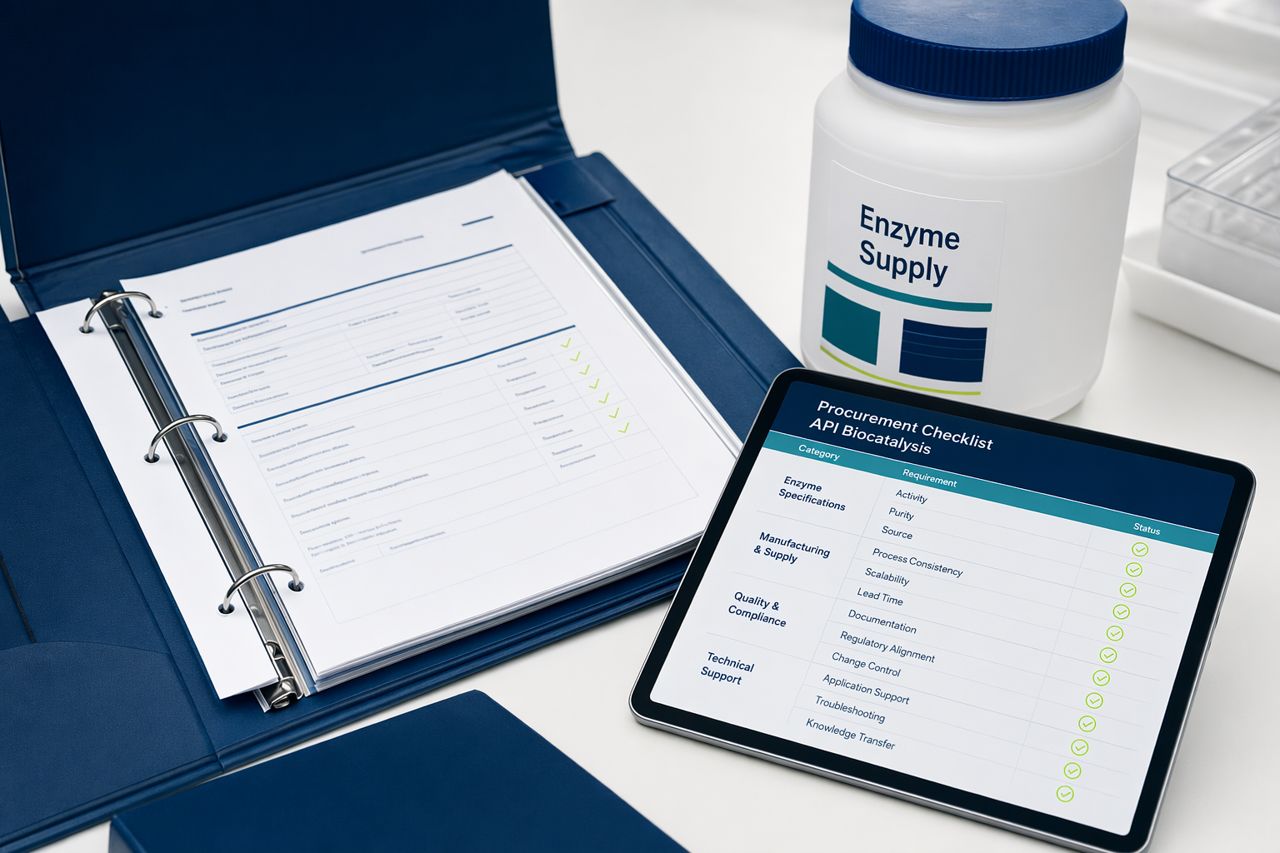
Procurement checklist for process chemists
Before requesting bulk enzyme supply, confirm that your team can answer the following:
- What is the target transformation and why is biocatalysis preferred?
- Which reaction conditions are already constrained by the route?
- Which impurities are known, suspected, or phase-critical?
- What stereochemical specification must be protected?
- How will the enzyme be removed or controlled downstream?
- What documentation does quality require before purchase?
- What quantity and timing are needed for the next campaign?
- What change notification expectations apply?
- Who will support troubleshooting during transfer or scale-up?
- What information must be included in the supplier quote?
Request a quote
If your team is evaluating an enzymatic step for an API route, Chiralift can help define the enzyme supply package, documentation expectations, and scale-up support needed for procurement review.
Request a quote using the on-site form
Provide the target transformation, development phase, desired quantity range, and required documentation. A Chiralift technical contact will review the request and respond with the next steps.