CDMO Guide: Biocatalysis Raw Material Sourcing for Client API Programs
Client API programs move quickly, but raw material decisions can lock in risk for the whole route. For CDMOs using biocatalysis, enzyme sourcing is not only a purchasing step. It affects route viability, impurity control, batch reproducibility, regulatory documentation, and campaign readiness.
Chiralift supports CDMO process chemistry teams as a bulk enzyme supplier for pharmaceutical biocatalysis. The goal is practical: help determine whether an enzyme option can fit the substrate, process conditions, plant constraints, documentation expectations, and supply timeline before the client route is committed.
Why enzyme sourcing should start before route lock
A biocatalytic step may look attractive in development because it improves selectivity, simplifies a resolution, or reduces protecting-group burden. The sourcing question is whether that enzyme can be supplied and controlled in a way that supports the next stage of the program.
Early sourcing review helps CDMOs avoid late-stage questions such as:
- Can the selected enzyme be supplied in consistent bulk lots for repeated client campaigns?
- Does the enzyme format fit the intended plant operation and workup?
- Are residual protein, salt, carrier, or formulation components compatible with downstream impurity control?
- Can the supplier support documentation needed for client technical files and quality review?
- Is there a credible path from screening quantity to kilo lab, pilot, and commercial planning?
The best time to answer these questions is before the route is defended to the client.
What CDMOs should evaluate when sourcing enzymes
1. Route fit and substrate context
Enzyme selection depends on the real route, not just the reaction class. A sourcing discussion should include substrate structure, functional-group sensitivity, co-solvent exposure, expected substrate load, competing side reactions, and downstream isolation strategy.
For API intermediates, Chiralift typically reviews whether the enzyme option is suited for:
- Chiral alcohol, amine, acid, ester, or lactone formation
- Asymmetric reduction or oxidation steps
- Transamination or amination strategies
- Hydrolysis, esterification, or kinetic resolution
- Nitrile, amide, or ester transformations where chemoselectivity matters
- Late intermediate routes where impurity tolerance is narrow
This route-first review helps separate promising enzyme classes from options that may be difficult to implement at scale.
2. Impurity and downstream control
For a CDMO, selectivity is only valuable if the impurity profile can be understood and controlled. Enzymes can reduce chemical by-products, but they also introduce sourcing considerations such as formulation excipients, inorganic salts, host-cell derived residues, stabilizers, and process-related carryover.
A practical sourcing review should ask:
- Does the enzyme format introduce components that may complicate isolation?
- Can the process remove or control enzyme-derived residues under the planned workup?
- Are there known side reactions under the target process window?
- Does the enzyme support the desired stereochemical outcome with enough margin for development?
- Will the impurity narrative be defensible during client and quality review?
Chiralift supports these discussions with a validation-aware view of enzyme supply, not unsupported claims.
3. Supply continuity and campaign readiness
CDMOs often face compressed timelines: demonstration batch, client sample, pilot confirmation, registration support, and commercial readiness may follow in sequence. Enzyme supply must be planned to match that path.
Key sourcing questions include:
- What lead time is realistic for development, scale-up, and repeat bulk demand?
- Can batch-to-batch expectations be defined before the program advances?
- Are there foreseeable raw material or manufacturing constraints?
- Can the supplier support forecast discussions without forcing premature commitment?
- Is there a change control mindset suitable for regulated client programs?
For client API work, continuity is part of technical risk management.
4. Documentation for client-facing programs
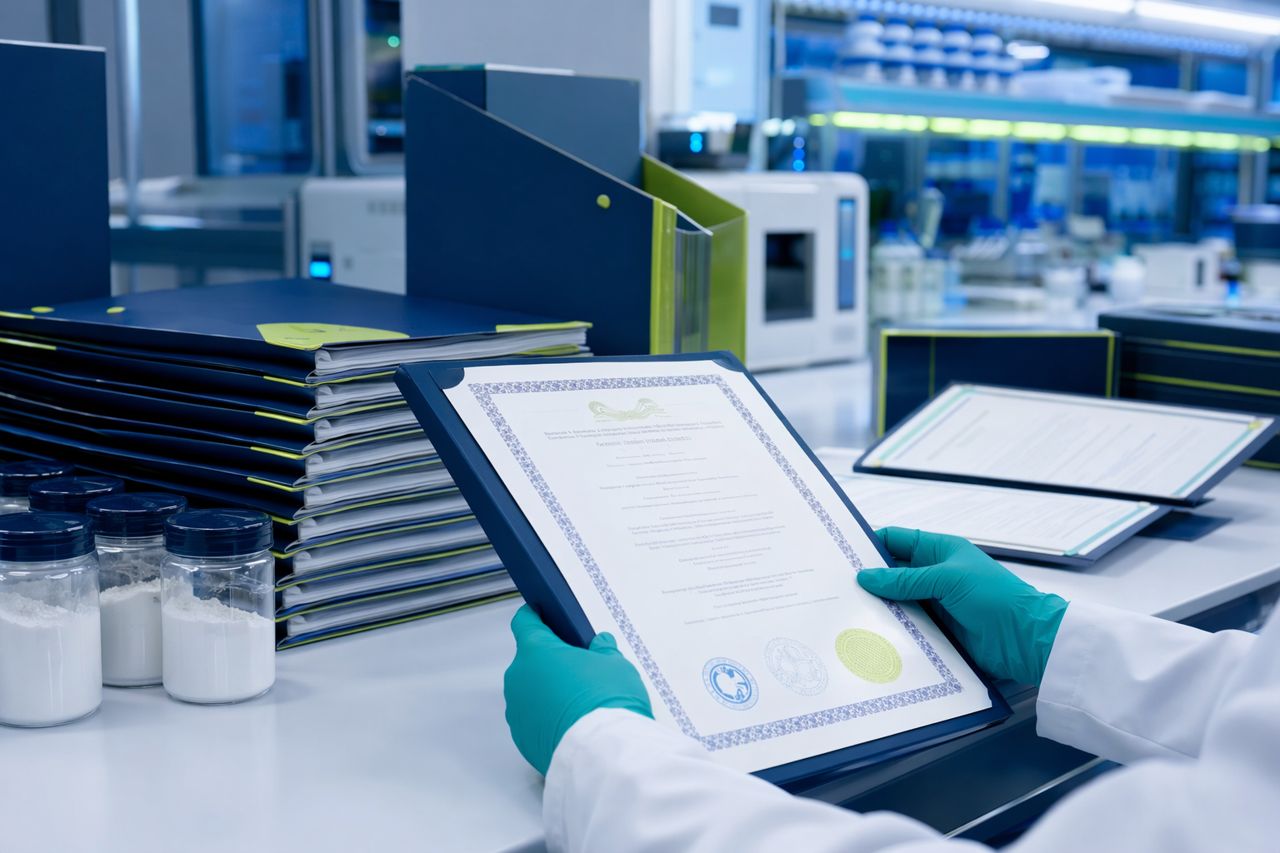
A CDMO may not need the same documentation at every phase, but the sourcing plan should anticipate progression. Typical document expectations may include product identity information, certificate documentation, manufacturing origin statements where appropriate, quality and contaminant declarations, storage guidance, and change notification practices.
The important point is not to over-document too early. It is to define what will be needed as the program moves from development to validated supply.
Chiralift helps teams align enzyme documentation with the phase of the API program and the client’s quality expectations.
A practical enzyme sourcing workflow for CDMOs
Step 1: Share the route context
Provide the target transformation, substrate class, desired stereochemical outcome, planned solvent system, approximate operating window, and downstream isolation concept. Detailed confidential structures can be handled under appropriate confidentiality terms when needed.
Step 2: Identify feasible enzyme categories
Chiralift reviews the route against relevant enzyme families and supply forms. The focus is not theoretical enzyme breadth, but options with a credible path toward bulk supply.
Step 3: Check process compatibility
Before scale-up, process chemists should evaluate whether the enzyme can tolerate the required pH, temperature, solvent, substrate exposure, and reaction time range. Compatibility with filtration, extraction, crystallization, or other workup steps should be considered early.
Step 4: Map quality and documentation needs
The CDMO and client should agree which documents are needed now, which may be needed later, and what supplier commitments are required before pilot or commercial planning.
Step 5: Plan bulk supply and change control expectations
Once an enzyme is selected, supply planning should address lead time, packaging, storage, lot consistency, forecast communication, and change notification. This is where a bulk enzyme supplier becomes part of program execution, not just raw material procurement.
Common sourcing mistakes in CDMO biocatalysis programs
- Treating the enzyme as a commodity before the route has been assessed
- Screening only for reaction performance while ignoring downstream removal
- Waiting until pilot planning to ask about documentation
- Selecting an enzyme without confirming bulk availability path
- Underestimating client review of formulation components and origin information
- Assuming a development sample automatically represents future bulk supply
- Not aligning enzyme lead time with campaign scheduling
These mistakes are avoidable when sourcing, process chemistry, and quality review are connected early.
Where Chiralift fits
Chiralift supplies bulk enzymes for pharmaceutical biocatalysis programs where route fit, selectivity, documentation, and scale-up continuity matter. We work with CDMOs that need technically grounded sourcing support for client API intermediates, including chiral building blocks and advanced intermediates.
We can support discussions around:
- Enzyme class selection for a target transformation
- Bulk supply feasibility and lead-time planning
- Process compatibility considerations
- Documentation expectations by program phase
- Supply continuity for repeated client campaigns
- Practical scale-up questions before route lock
We do not position an enzyme as ready for every route. The right enzyme supply plan depends on the chemistry, process window, documentation requirements, and commercial intent.
Request a quote
If your CDMO is evaluating a biocatalytic step for a client API program, send the route context through the on-site request a quote form. Include the target transformation, development phase, expected scale, process constraints, and documentation needs. Chiralift will respond with a practical view of fit, supply path, and next steps.